


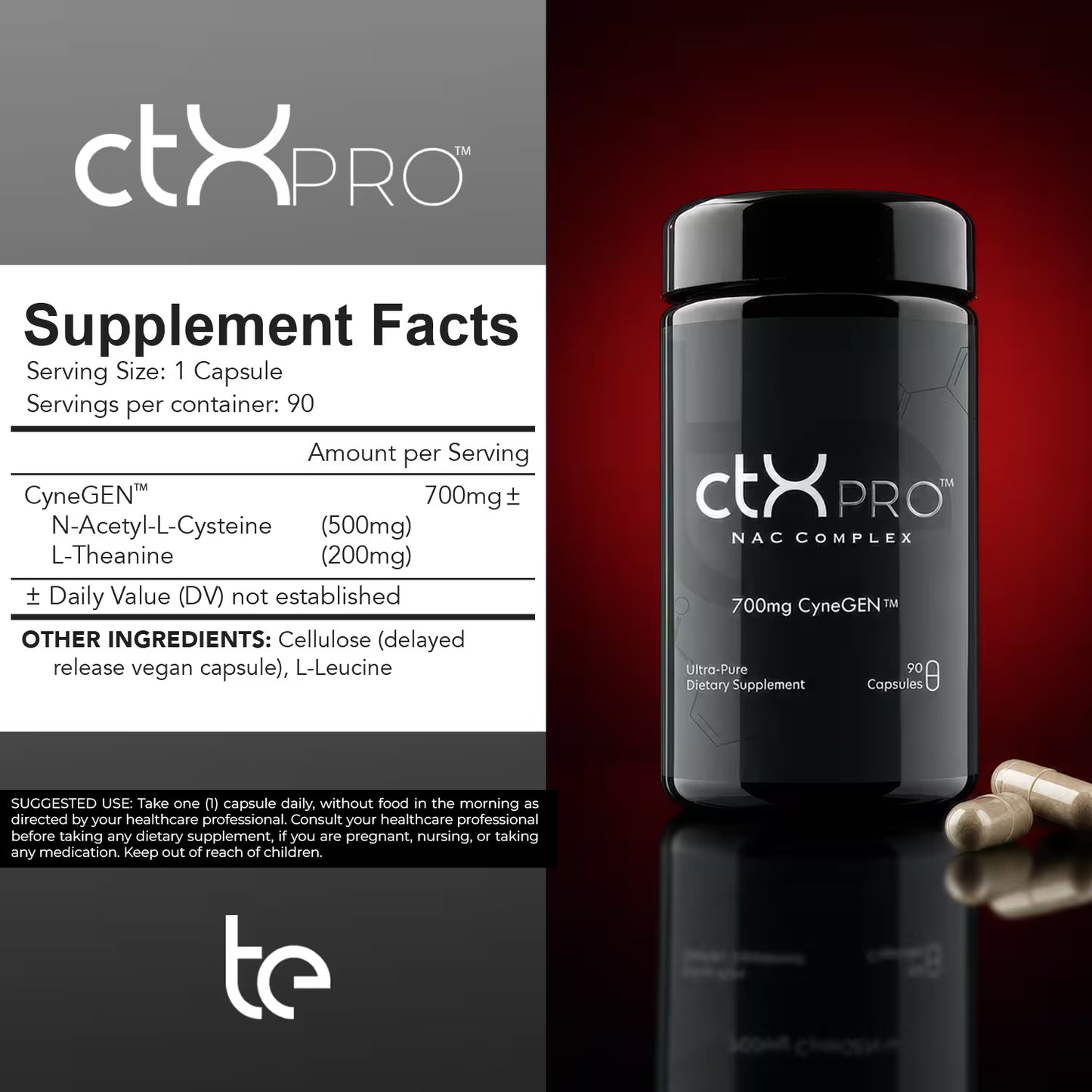


ctXPRO is our proprietary complex CyneGEN™, an ultra-pure, cell bio-protector of N-Acetyl-L-Cysteine (NAC) and L-Theanine to support mitochondrial function, detoxification and neuroprotection.
Your body is made of trillions of cells. Each of these cells requires the correct balance between reactive oxygen species (ROS) and antioxidants. Inside every cell are mitochondria responsible for both the production of most of the energy and ROS. Healthy mitochondrial
function is needed to maintain the delicate equilibrium of ROS and antioxidants, as both must be properly regulated. This is true for mitochondria in physiological cells as well as neurological cells.
N-Acetyl-L-Cysteine (NAC) is a potent bio-protector/antioxidant. NAC is a precursor to glutathione (a master antioxidant), and it supports cellular oxidative metabolism to modulate antioxidant pathways and inflammatory responses. NAC also helps reduce mucus viscosity for healthy lung and respiratory function, as well as binding with heavy metal ions, aiding liver and kidney detoxification. L-Theanine is an
amino acid which increases alpha brain waves, dopamine, serotonin and GABA levels in order to induce relaxation, promoting healthy brain chemistry and neuroprotection. This combination provides the necessary support for all your cells.
ctXPRO is the result of expert aging science, professionally formulated with CyneGEN, which is 99%+ pure complex, with extremely high antioxidant, anti-inflammatory, anticarcinogenic, cardio- and neuroprotective properties, combined with delayed release vegan capsules which are clinically proven to resist stomach acids for targeted absorption in the small intestine, providing maximum bioavailability.
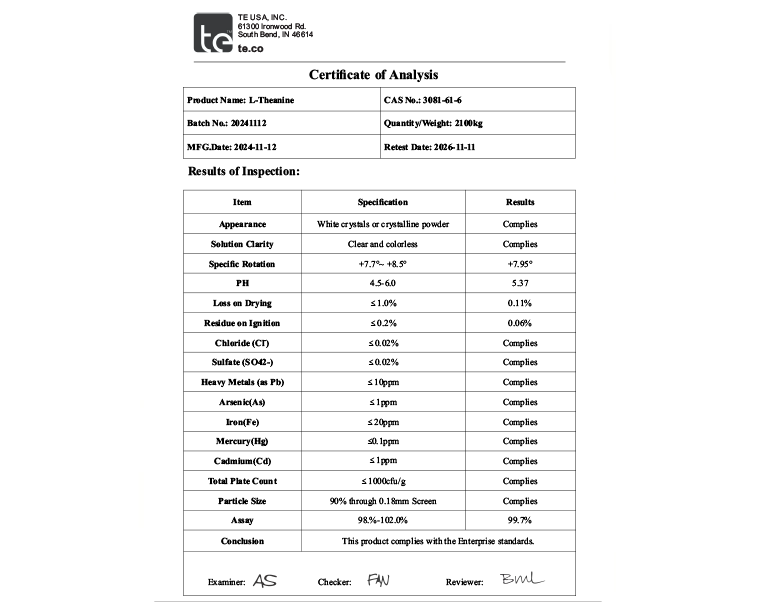
ctXPRO is proudly manufactured in the USA and sold exclusively in the USA. Every batch is third-party tested to ensure professional-grade quality and purity. Our packaging includes BPA free ultraviolet glass for superior preservation, as well as FSC mix box material and soy-based inks to help protect forests and promote sustainable practices in the packaging industry.
The science of healthy aging is clear: Cell health = Your health.

Take one (1) capsule 1-3 times daily, or as directed by your healthcare professional. Consult your healthcare professional before taking any dietary supplement, if you are pregnant, nursing, or taking any medication. Keep out of reach of children.
Store in a cool, dry place away from direct sunlight. Do not use if tamper-evident packaging is broken or missing.
The Synergistic Effects of N-Acetyl-L-Cysteine (NAC) and L-Theanine Supplementation on Neuroprotection, Cognitive Function, and Oxidative Stress*
N-Acetyl-L-Cysteine (NAC) and L-Theanine are two naturally derived compounds that are critical for their health benefits, particularly in neuroprotection, cognitive function, and oxidative stress management. NAC is an amino acid which is renowned for its role as a precursor to glutathione (GSH), a critical cellular antioxidant, and has many biological activities, including antioxidant, anti-inflammatory, and mucolytic effects. L-Theanine, an amino acid predominantly found in green tea, and is celebrated for its relaxation, cognitive-enhancing, and neuroprotective properties. The combination of NAC and L-theanine provide the most unique synergistic support for the health of all your cells – both the cells in your heart, skin and other organs, but also for the cells in your brain.
N-Acetyl-L-Cysteine and L-Theanine Biological Function
N-Acetyl-L-Cysteine: N-Acetyl-L-Cysteine (NAC) is a super antioxidant, with a broad spectrum of biological functions. It is a precursor to GSH and a direct scavenger of free radicals, particularly oxygen radicals. (1, 2) Its sulfur-containing thiol group enables it to maintain cellular redox balance, making it a key player in combating oxidative stress-related disorders. (1) NAC’s antioxidant properties are complemented by its anti-inflammatory effects. NAC inhibits NF-κB activation and reduces proinflammatory cytokine production. (3, 4) These qualities make NAC a critical health supplement for maintaining the health of your cells.* (5)
NAC modulates glutamate levels via the cystine-glutamate exchange system, influencing mood, impulsivity, and obsessive behaviors. (6) Its mucolytic properties, which involve breaking disulfide bonds in mucin molecules, enhances its efficacy in supporting your respiratory function (7, 8) , expanding its therapeutic applications.* In reproductive health, NAC improves antioxidant status and reproductive performance under heat stress (9).
L-Theanine: L-Theanine is a specialized amino acid primarily sourced from tea leaves (Camellia sinensis), It has important antioxidant and anti-inflammatory properties. These contribute to its ability to reduce oxidative stress and inflammation. (10, 11) L-Theanine particularly supports brain function, where it enhances cognition in areas such as attention, working memory, and executive function. L-Theanine supplementation significantly improves these cognitive parameters in middle-aged and older adults, suggesting its relevance in age-related cognitive decline. (12)
The impact of L-Theanine extends to mental health, with effects on non-clinical depression.* L-Theanine influences the central monoaminergic neurotransmitter system which includes serotonin, dopamine, and gamma-aminobutyric acid (GABA). (13, 14) These neurotransmitter modulations underpin their anxiolytic effects, promoting relaxation and reducing stress-related emotional responses. (15, 16) Furthermore, L-Theanine’s ability to block glutamate receptors provides special neuroprotective benefits.* (17, 18) The biological roles of L-Theanine go beyond the central nervous system (CNS). It supports cardiovascular health, liver and kidney function, and immune regulation. (1) In reproductive health, -Theanine enhances Sertoli cell proliferation and mitochondrial function in humans, implying a role in male fertility. (19) Like NAC, its antioxidant effects protect against reactive oxygen species (ROS)-induced damage in tissues such as cardiomyocytes and bladder tissues. (20) At the same time, its regulation of lipid metabolism via the CaMKKβ-AMPK pathway suggests potential in supporting the management of metabolic disorders like nonalcoholic fatty liver disease.* (21)
N-Acetyl-L-Cysteine and L-Theanine Physiology
N-Acetyl-L-Cysteine: NAC’s physiological effects start with its role as a GSH precursor and its antioxidant and anti-inflammatory properties. (1) By enhancing GSH synthesis, NAC protects cells from oxidative damage, with known medical applications in conditions like COPD and acetaminophen overdose.* (7, 22) Its mucolytic action reduces mucus viscosity, improving respiratory function (23), while its modulation of glutamate levels suggests neuroprotective benefits. (16) NAC influences cellular signaling pathways, including apoptosis and immune responses, maintaining homeostasis. (24, 25)
L-Theanine: L-Theanine’s physiological effects are mediated by its interactions with neurotransmitter systems and its antioxidant capabilities. It increases brain levels of serotonin, dopamine, and GABA while displaying an affinity for AMPA, Kainate, and NMDA receptors (26), contributing to its relaxing and cognitive-enhancing properties. Within tea plants, L-Theanine is biosynthesized in roots and transported to young leaves via xylem sap, where it supports catechin production. (27) Its ability to cross the blood-brain barrier in humans enables it to modulate glutamatergic and GABAergic activity, promoting relaxation without sedation. (28)
L-Theanine’s antioxidant properties bolster cellular resilience against oxidative stress by upregulating enzymes such as superoxide dismutase and GSH. (20, 29) It also suppresses chronic sympathetic hyperactivity suggesting cardiovascular support benefits. (29) L-Theanine enhances attention and alpha brain wave activity, particularly when combined with caffeine, making it suitable for managing attention deficit.* (30, 31) Its favorable pharmacokinetics, including rapid absorption and effective brain penetration, further support its health benefits. (32) Additionally, L-Theanine’s protective effects against testicular toxicity (33) and its influence on immune function (20) underscore its broad physiological impact.
N-Acetyl-L-Cysteine and L-Theanine Supplementation Pharmacokinetics
NAC is rapidly absorbed in the gastrointestinal tract, peaking in plasma within 30-60 minutes, with a half-life of 5-6 hours. (34) It is metabolized into cysteine, enhancing GSH levels, and it crosses the blood-brain barrier. L-Theanine is absorbed within 30-60 minutes, peaking within 2 hours, and is converted to glutamate and ethylamine. (35) It is also transported across the blood-brain barrier and this occurs via large neutral amino acid transporters which help facilitate its cognitive brain. (36)
NAC and L-Theanine Work Synergistically Together
Both NAC and L-Theanine are powerful antioxidants and have healthy anti-inflammatory effects. Both these amino acids support the proper functioning of your cells. The beauty is that they work by different biological pathways, as detailed above. This means that they are not just piling on top of each other in your body, Instead, they are working in different ways. This is exactly the way your body functions naturally. There are many different pathways your body uses to protect itself and enhance its health. The combination of NAC and L-Theanine does the same thing – the different pathways result in a synergistic effect. Synergism means that the support provided by NAC and L-Theanine are not just separate; they actually enhance each other, causing a “1+1=3” effect where each enhances the effect of the other, making for a very unique and strong health supplement.

N-Acetyl-L-Cysteine and L-Theanine Safety
NAC is well-tolerated at 600-1200 mg/day, with occasional minor side effects like gastrointestinal discomfort. (37) L-Theanine is extremely well-tolerated at 200-400 mg/day, with no significant adverse effects. (38) The safety of both compounds have been extensively studied, and at the doses used, both compounds are considered very safe. (39, 40)
Conclusion
NAC and L-Theanine exhibit complementary and synergistic support for the health of your cells, with NAC excelling in antioxidant and mucolytic roles and L-Theanine in neuroprotection and anxiolysis. Their synergistic effects in neuroprotection, cognitive enhancement, and oxidative stress management make this combination just the right combination for the health of your cells.
*This literature review has not been evaluated by the Food and Drug Administration, and therefore the information contained herein is not intended to diagnose, treat, cure, or prevent any disease. According to the FDA, only drugs can make those claims.
References:
- Mokhtari, V., Afsharian, P., Shahhoseini, M., Kalantar, S. M. & Moini, A. A Review on Various Uses of N-Acetyl Cysteine. Cell journal 19, 11–17 (2016).
- Guerini, M., Condrò, G., Perugini, P., Friuli, V. & Maggi, L. N-acetylcysteine (NAC) and Its Role in Clinical Practice Management of Cystic Fibrosis (CF): A Review. Pharmaceuticals 15, 217 (2022).
- Pei, Y. et al. Biological Activities and Potential Oral Applications of N-Acetylcysteine: Progress and Prospects. Oxidative Medicine and Cellular Longevity 2018, 1–14 (2018).
- Santus, P. et al. Anti-Inflammatory and Anti-Oxidant Properties of N-Acetylcysteine: A Fresh Perspective. Journal of clinical medicine 13, 4127 (2024).
- Bradlow, R. C. J., Berk, M., Back, S. E., Kanaan, R. A. & Kalivas, P. W. The Potential of N-Acetyl-L-Cysteine (NAC) in the Treatment of Psychiatric Disorders. CNS Drugs 36, 451–482 (2022).
- Berk, M. et al. Nail-Biting Stuff? The Effect of N-acetyl Cysteine on Nail-Biting. CNS Spectrums 14, 357–360 (2009).
- Calzetta, L., Matera, M. G., Rogliani, P. & Cazzola, M. Multifaceted activity of N-acetyl-l-cysteine in chronic obstructive pulmonary disease. Expert Review of Respiratory Medicine 12, 693–708 (2018).
- Tieu, S. et al. N-Acetylcysteine and Its Immunomodulatory Properties in Humans and Domesticated Animals. Antioxidants (Basel, Switzerland) 12, 1867 (2023).
- Omid, K., Amirali, S. & Ahmad, K. N-Acetyl cysteine improves performance, reproduction, antioxidant status, immunity and maternal antibody transmission in breeder Japanese quail under heat stress condition. Livestock Science 217, 55–64 (2018).
- Li, M.-Y. et al. L-Theanine: A Unique Functional Amino Acid in Tea (Camellia sinensis L.) With Multiple Health Benefits and Food Applications. Frontiers in Nutrition 9, (2022).
- Williams, J. L. et al. The Effects of Green Tea Amino Acid L-Theanine Consumption on the Ability to Manage Stress and Anxiety Levels: a Systematic Review. Plant Foods for Human Nutrition 75, 12–23 (2019).
- Baba, Y. et al. Effects of L-Theanine on Cognitive Function in Middle-Aged and Older Subjects: A Randomized Placebo-Controlled Study. Journal of Medicinal Food 24, 333–341 (2021).
- Yin, C. et al. Antidepressant‐like Effects of L‐theanine in the Forced Swim and Tail Suspension Tests in Mice. Phytotherapy Research 25, 1636–1639 (2011).
- Wise, L. E. et al. L-Theanine attenuates abstinence signs in morphine-dependent rhesus monkeys and elicits anxiolytic-like activity in mice. Pharmacology, Biochemistry and Behavior 103, 245–252 (2012).
- Kim, S., Jo, K., Hong, K.-B., Han, S. H. & Suh, H. J. GABA and L-Theanine mixture decreases sleep latency and improves NREM sleep. Pharmaceutical Biology 57, 64–72 (2019).
- Yoto, A., Murao, S., Motoki, M. & Yokogoshi, H. Effects of L-Theanine or caffeine intake on changes in blood pressure under physical and psychological stresses. Journal of Physiological Anthropology 31, (2012).
- Ritsner, M. S. et al. L-Theanine Relieves Positive, Activation, and Anxiety Symptoms in Patients With Schizophrenia and Schizoaffective Disorder. The Journal of Clinical Psychiatry 72, 34–42 (2010).
- Ota, M. et al. Effect of L-Theanine on glutamatergic function in patients with schizophrenia. Acta Neuropsychiatrica 27, 291–296 (2015).
- Dias, T. R. et al. L-Theanine promotes cultured human Sertoli cells proliferation and modulates glucose metabolism. European Journal of Nutrition 58, 2961–2970 (2019).
- Li, C., Tang, S., Tan, Z., Xiao, W. & Yan, Q. L-Theanine Protects H9C2 Cells from Hydrogen Peroxide-Induced Apoptosis by Enhancing Antioxidant Capability. Medical Science Monitor 24, 2109–2118 (2018).
- Liang, J. et al. L-Theanine Prevents Progression of Nonalcoholichepatic Steatosis by Regulating Hepatocyte Lipid Metabolic Pathways via the CaMKKβ-AMPK Signaling Pathway. Preprint at https://doi.org/10.21203/rs.3.rs-820686/v1 (2021).
- Reddy, M. A. Hepatoprotective Potential of Green Tea Extract against Experimental Hepatotoxicity in Rats. Indian Journal of Pharmaceutical Sciences 79, (2017).
- Suarez, W. T., Vieira, H. J. & Fatibello-Filho, O. Generation and destruction of unstable reagent in flow injection system: determination of acetylcysteine in pharmaceutical formulations using bromine as reagent. Journal of Pharmaceutical and Biomedical Analysis 37, 771–775 (2004).
- Lu, S. C. Glutathione synthesis. Biochimica et Biophysica Acta (BBA) - General Subjects 1830, 3143–3153 (2012).
- Wu, G., Yang, S., Fang, Y.-Z., Lupton, J. R. & Turner, N. D. Glutathione Metabolism and Its Implications for Health. The Journal of Nutrition 134, 489–492 (2004).
- Nathan, P., Oliver, C., Gray, M. & Lu, K. The Neuropharmacology of L-Theanine(N-Ethyl-L-Glutamine). Journal Of Herbal Pharmacotherapy 6, 21–30 (2006).
- Ashihara, H. Occurrence, Biosynthesis and Metabolism of Theanine (γ-Glutamyl-L-ethylamide) in Plants: A Comprehensive Review. Natural Product Communications 10, 1934578X1501000 (2015).
- Zukhurova, M. et al. L‐theanine Administration Results in Neuroprotection and Prevents Glutamate Receptor Agonist‐Mediated Injury in the Rat Model of Cerebral Ischemia‐Reperfusion. Phytotherapy Research 27, 1282–1287 (2012).
- Matsuoka, K. et al. L-Theanine Protects Bladder Function by Suppressing Chronic Sympathetic Hyperactivity in Spontaneously Hypertensive Rat. Metabolites 11, 778 (2021).
- Owen, G. N., Parnell, H., De Bruin, E. A. & Rycroft, J. A. The combined effects of L-Theanine and caffeine on cognitive performance and mood. Nutritional Neuroscience 11, 193–198 (2008).
- Kahathuduwa, C. N. et al. Effects of L-Theanine\\u2013caffeine combination on sustained attention and inhibitory control among children with ADHD: a proof-of-concept neuroimaging RCT. Scientific Reports 10, (2020).
- Van Der Pijl, P. C., Chen, L. & Mulder, T. P. J. Human disposition of L-Theanine in tea or aqueous solution. Journal of Functional Foods 2, 239–244 (2010).
- Ye, Y. et al. Protective Effect of L-Theanine on Cyclophosphamide-Induced Testicular Toxicity in Mice. Journal of Agricultural and Food Chemistry 71, 8050–8060 (2023).
- Joshy, A. et al. PHARMACOLOGICAL APPLICATIONS AND PHARMACOKINETIC MODIFICATIONS OF N-ACETYLCYSTEINE. International Journal of Pharmaceutics and Drug Analysis 17–30 (2023) doi:10.47957/ijpda.v11i1.535.
- Scheid, L. et al. Kinetics of ʟ-Theanine Uptake and Metabolism in Healthy Participants Are Comparable after Ingestion of ʟ-Theanine via Capsules and Green Tea1–4. The Journal of Nutrition 142, 2091–2096 (2012).
- Yamamoto, S. et al. The Involvement of L-Type Amino Acid Transporters in Theanine Transport. Bioscience, Biotechnology, and Biochemistry 76, 2230–2235 (2012).
- Garg, G., Singh, S., Singh, A. K. & Rizvi, S. I. N-acetyl-l-cysteine attenuates oxidative damage and neurodegeneration in rat brain during aging. Canadian Journal of Physiology and Pharmacology 96, 1189–1196 (2018).
- Hidese, S. et al. Effects of L-Theanine Administration on Stress-Related Symptoms and Cognitive Functions in Healthy Adults: A Randomized Controlled Trial. Nutrients 11, 2362 (2019).
- Tsai, M.-S. et al. N-acetyl Cysteine Overdose Induced Acute Toxicity and Hepatic Microvesicular Steatosis by Disrupting GSH and Interfering Lipid Metabolisms in Normal Mice. Antioxidants (Basel, Switzerland) 13, (2024).
- Garg, G., Singh, S., Singh, A. K. & Rizvi, S. I. N-acetyl-l-cysteine attenuates oxidative damage and neurodegeneration in rat brain during aging. Canadian Journal of Physiology and Pharmacology 96, 1189–1196 (2018).